Tag Archives: economy

Taking Governance Beyond Partisanship To Performance And Service Delivery I

By Prof Chris Mustapha Nwaokobia Jnr

Since his inauguration on May 29, 2023, as Governor of Abia State, Dr. Alex Otti has made remarkable strides across Infrastructure, Healthcare, Education, Security and Economic Reform. With a technocratic background and a vision for sustainable transformation, his tenure is already being described as “unprecedented” by Traditional Rulers, Political Operators, Civil Society Advocates, Stakeholders and Critics alike.

A Vision Rooted in Reform and Delivery.

Governance under Dr. Otti is characterised by professionalism, data‑driven decision‐making and transparency. Former Banker turned Governor, he has brought Private‐sector discipline to the public square.
He states his covenant clearly… “to serve all Abians, not a few people.”

From the outset, he declared emergencies in key sectors—Roads, Health, Sanitation and Security – signalling a break from business as usual.

Infrastructure And Connectivity: Roads, Power and Urban Renewal

One of the hallmarks of the Otti administration is the scale and quality of infrastructure. Over 140 roads have been constructed or rehabilitated across Abia State, including Rural ring roads that connect previously isolated communities.

The expansion of the Ossah Road in Umuahia into a six‑lane boulevard (now Aguiyi Ironsi Boulevard) and major works in Aba attest to the ambition of this exceptional Leader.

Power reforms: Understanding that commerce depends on reliable electricity, Dr. Otti’s administration has targeted improved power supply and addressed infrastructure bottlenecks.

These efforts show a shift from fragmented works to strategic infrastructure with economic and social impact. “Our benchmark now is not just the Kilometres built but the economic and social impact they deliver,” the Governor once observed.

Healthcare And Human Capital Development: Investing in People.

Dr. Otti’s government has placed clear emphasis on Health and Education as foundations for long‑term growth.

Health: The State has launched “Project Ekwueme” to upgrade primary Health Care Centres across the 184 wards of the State, and refurbish tertiary facilities including the State Teaching Hospital.

Education and Recruitment.

Thousands of Teaching Staff have been brought on board, and very profound school infrastructure improvements are ongoing.

Welfare: Pension and very long neglected Salary arrears have been systematically cleared, restoring dignity to workers and retirees.

By investing in such fundamentals, the administration is laying the basis for a more resilient and inclusive society.

Economy And The Requisite Enabling Environment Necessary For Business To Thrive.

The Otti administration recognises that Abia’s strength lies in entrepreneurship, industry (especially around Aba), and a favourable business climate. And like a man with an unrivaled clarity of purpose, Dr. Alex Chioma Otti has in less than 2 years and 6 months lifted Aba from the morass to reclaim its pride as the centre of commerce and industry in the South East.

Understanding that Governments must at all times work for the good of the greater number, Dr Otti has followed through with the Reform of revenue collection and taxation to ease burdens on traders while enhancing State income.

Industrial and Innovation Park Initiatives (e.g the Abia Industrial And Innovation Park) as part of economic diversification.

International Partnerships And Donors Engagement: The state has unlocked multi‑lateral support and made Abia more “investment‑ready”.

These efforts speak to a shift from passive dependency to proactive economic fervency.

Governance, Security And Institutional Reform.

A functioning State requires more than projects, it requires strong institutions and a safe environment. To this end the ‘Operation Crush’ Security outfit and multi‑agency collaboration has improved the security profile of Abia State.

Transparency and due process have become key features of the Alex Otti administration, as payments are cleared in 72 hours in some Agencies, and merit‑based recruitment has become the benchmark in the Civil Service. Such institutional reforms matter because they enable sustainability, not just short‑term wins.

Recognition And Early External Validation.

Stakeholders see what is happening in Abia. Traditional Rulers are unanimous in the description of Dr. Otti’s mid‑term performance as “profound and unprecedented”.

Donor Agencies have returned and expanded operations in the State on account of the dogged commitment of Dr Otti’s administration to make Abia State the envy of the States.

I shall in the sequel to this effort furnish my readers with incontrovertible data and details regarding the massive transformation of Abia State under the able superintendence of Dr. Alex Otti.

*Prof Chris Mustapha Nwaokobia Jnr is the Convener COUNTRYFIRST MOVEMENT,a Good Governance Advocacy Group.

Visa Crisis Between Nigeria and Ethiopia Imperils Pan-African Cooperation, AASU Urges Immediate Diplomatic Resolution

The All-Africa Students’ Union (AASU) has issued a statement of grave concern regarding what it describes as a “wanton visa consular crisis” between the Federal Republic of Nigeria and the Federal Democratic Republic of Ethiopia. The regional umbrella student body warned that the escalating tensions between these two influential African countries are inflicting serious harm on academic mobility, regional cooperation, and the broader goals of continental integration.

In a formal statement released by the Union, AASU condemned the recent developments in consular relations, particularly the mutual removal of both nations from each other’s eVisa eligibility list. According to the Union, there is now no known avenue for ordinary passport holders from either country to apply for visas, a situation that has led to significant delays, rejections, and confusion for travelers, especially within the academic community.

“These recent developments have resulted in stringent visa requirements, delays, and rejections, severely impacting regional integration, academic mobility, and cooperation between the two nations,” stated HE Osisiogu Osikenyi E., President of the All-Africa Students’ Union.

The Union expressed deep concern about how this consular standoff undermines critical frameworks such as the African Continental Free Trade Area (AfCFTA) and the African Union’s Agenda 2063. According to the statement, these frameworks are founded on the principles of economic integration, free movement, and pan-African collaboration — principles that are now being put in jeopardy by this growing visa impasse.

President of All-Africa Students' Union (AASU), HE Osisiogu Osikenyi

“The visa consular crisis undermines the principles of the African Continental Free Trade Area (AfCFTA) and the African Union’s Agenda 2063, which aim to promote economic integration, mobility, and cooperation among African countries,” the Union stated. It emphasized that the ability of students, researchers, and academics to travel, collaborate, and engage in joint intellectual endeavors is being severely hindered, threatening to stall the continent’s academic and developmental progress.

AASU’s statement further highlighted the damaging consequences this crisis is having on education and research partnerships. The Union noted that joint academic programs are being canceled or indefinitely postponed due to the prevailing visa uncertainties. Student exchange programs, a vital aspect of academic development and cultural exchange, have also been significantly disrupted. Researchers, too, are finding it increasingly difficult to collaborate, share knowledge, and innovate, as visa constraints continue to close doors that should be open.

“The restrictions imposed by both countries have resulted in cancelled academic programs, disrupted student exchanges, and limited research collaboration,” the Union emphasized. It expressed that such disruptions are not only a setback for the individuals affected but for the collective progress of African academia.

In light of the seriousness of the issue, the All-Africa Students’ Union issued an urgent appeal to the governments of Nigeria and Ethiopia to take immediate and decisive action. “The Presidency of the All-Africa Students’ Union urges the Governments of Nigeria and Ethiopia to ease visa requirements, simplify and streamline visa application processes to facilitate academic mobility and cooperation,” the statement declared.

The Union also called for increased diplomatic engagement aimed at resolving the crisis and repairing bilateral relations. “Engage in diplomatic efforts to resolve the crisis and strengthen bilateral relations,” AASU urged, adding that efforts should be geared toward promoting unity and shared progress rather than reinforcing division.

In a powerful concluding appeal, AASU called on key African leaders to intervene. “The AASU calls on HE President Bola Ahmed Tinubu GCFR of Nigeria, and HE Prime Minister Abiy Ahmed Ali of Ethiopia; and other African leaders to swiftly summon their Foreign Missions in both countries to address the lingering impasse,” read the final section of the statement. The Union further urged the Chairperson of the African Union Commission, H.E. Mahmoud Ali Youssouf, to take active steps to mediate and mobilize both governments in favor of resolving the crisis in the interest of regional integration and academic cooperation.

“We believe that by working together, we can build a stronger, more prosperous, and more integrated Africa,” President Osikenyi concluded, reinforcing the Union’s commitment to the vision of a connected and collaborative continent.

The All-Africa Students’ Union, which represents millions of students across the continent, is calling on all stakeholders — including the governments of Nigeria and Ethiopia, their diplomatic missions, and the African Union — to act without delay to reverse this troubling trajectory. As the crisis continues to affect students, researchers, and educators, the future of academic collaboration between two of Africa’s most influential nations hangs in the balance.

EDA To Host Pan Africa/USA Business Summit in Minnesota December 5 -7

A Non-Profit Organization with focus on promoting equity and economic inclusion, Equitable Development Action (EDA) in partnership with Tibro Global Company Ltd, has concluded plans to hold Pan Africa/USA Business Summit in Minnesota with the aim of powering Pan Atlantic Economic Transformation through Trade and Investment.

In a press statement released in Abuja on Thursday by the duo of Nnadi Udoka, EDA’s Country’s Representative in Nigeria and Oluwapemi Aderogba, Managing Director of Tibro Global Company Ltd, while inviting Africans to participate in the summit noted that EDA acts as a catalyst for global economic advancement and promotes Economic Empowerment through facilitating partnerships and fostering trade relations.

The statement noted that the summit would empower businesses in both continents (Africa and United States) to thrive and contribute to economic growth.

Continuing, it assured the event would provide veritable platform for showcasing innovative ideas and entrepreneurial ventures, fostering creativity and driving innovation in both regions.

It informed that through initiatives focusing on sustainability and corporate social responsibility, the meeting would encourage businesses to adopt practices that benefit society and the environment.

The massage stated that by facilitating dialogue and cooperation between governments and businesses, the conference would contribute to strengthen diplomatic relations between African nations and the United States.

It stressed that the discussions would focus on Leveraging Clean Energy Technologies to Drive Economic Growth in Africa, The Role of AI and IoT in Energy Optimization, Smart Farming and Agritech Solutions, Mineral Exploration, Extraction and Processing.

Others include: Digital Transformation in the Creative Economy, The Rise of Africa’s Creative Tech Startups, How Technology is Influencing Industry in Africa, Public-Private Partnership – Working Together to Achieve Health for all, Enhancing Bilateral Trade and Investment Flows.

It however, revealed that participants would be opportune to connect with a diverse group of visionary leaders, entrepreneurs, government officials, and industry experts from Africa and the US, thereby expanding their professional network and fostering valuable connections.

It maintained that participants would dig deep into specific industry sectors with expert-led panel sessions, gaining valuable insights and strategies tailored to the participant’s area of interest or expertise.

The statement pointed out the possibility of participants gaining access to cutting-edge insights, trends, and best practices in international trade, investment, and entrepreneurship, empowering them to stay ahead of the curve in today’s rapidly evolving business landscape.

it noted the conferees would explore partnership opportunities and forge strategic alliances with businesses and organizations from diverse sectors, unlocking new avenues for collaboration and growth.

According to the statement, “The summit will discover untapped market and investment opportunities in Africa and the US, positioning your business for expansion and success in new geographical regions.

“Explore the exhibition hall featuring innovative products, services and investment opportunities, showcasing the latest trends and development in the African and US markets” the statement read in part.

It spoke of sponsorship opportunities which will provide wide array of benefits, including brand recognition, complimentary conference registration and private meeting facilitation. This is why the summit should be must-attend for captains of industry, Entrepreneurs, Urban Professionals, people from the academia, investors, senior business managers and government officials.

Why FG Must Integrate AU’s 2063 Agenda – Deputy Speaker

The Deputy Speaker of the House of Representatives, Benjamin Okezie Kalu has harped on the need for the Federal Government of Nigeria to intentionally integrate the African Union Agenda 2063 into the nation’s development strategy.

Kalu who led the Nigeria’s delegation to the recently concluded Conference of Speakers of African Parliament to Midrand, South Africa championed this cause as part of the communique issued to mark the end of the conference.

The Bende Federal Constituency of Abia State representative who stood in for the Speaker of the Nigerian House of Representatives, Tajudeen Abbas, stated by integrating the 2063 Agenda, Nigeria will set a model for other African countries to emulate.

The AU Agenda 2063 is an ambitious framework aimed at transforming Africa into a global powerhouse of the future. It envisions an integrated, prosperous, and peaceful continent, driven by its citizens and representing a dynamic force in the global arena.

The agenda comprises seven aspirations, each focused on key areas such as economic growth, social inclusion, sustainable development, and good governance.Deputy Speaker of the House of Representatives, Benjamin Okezie Kalu

In the words of the Deputy Speaker, Nigeria’s development aspiration has a nexus with the continent’s growth initiatives, even as he outlined that the President Bola Tinubu-led government is already implementing the goals of the AU Agenda 2063 across the broad themes of economic diversification, youth empowerment, economic diversification and good governance.

“As Africa’s most populous nation and largest economy, Nigeria holds a unique position on the continent. Although it has in the past faced multifaceted challenges, including economic volatility, infrastructural deficits, and social inequalities, the Nigeria’s future is bright given the focus of the current administration of President Tinubu,” Mr Kalu said.

The Deputy Speaker highlighted Nigeria’s ongoing efforts to diversify its economy away from oil dependency through investments in agriculture, technology, and renewable energy, stressing that “By embarking on economic diversification, Nigeria aims to foster sustainable economic growth that reflects the aspirations of Agenda 2063.”

He emphasized the importance of infrastructure as a cornerstone for economic development and touted the efforts of Nigeria in actively pursuing regional connectivity projects, such as the African Continental Free Trade Area (AfCFTA), which aligns with Agenda 2063’s goal of an integrated Africa.

On the continent’s demography prospect, Kalu highlighted Also the initiatives by the Federal Government aimed at empowering Nigeria’s youth through education and job creation. This as he stated aligns with the Agenda’s focus on a people-driven development strategy that engages the continent’s largest demographic group.

He also called for a comprehensive review of existing policies by African States to support the continent’s development agenda.

In acknowledging that a critical component of the AU Agenda is infrastructure development, the Deputy Speaker advocated for “An increased investment in critical infrastructure, including transportation, energy, and digital connectivity. Such investments will not only enhance Africa’s competitiveness but also facilitate intra-African trade and economic integration.”

He also highlighted the importance of regional integration as outlined in Agenda 2063 and urged his colleagues to establish frameworks that strengthen partnerships amongst African nations, fostering trade and economic collaboration that can enhance regional stability and growth.

Emphasizing further the importance of technology and innovation, Kalu added that “To remain competitive in a rapidly changing global landscape, Africa must prioritize technological advancement and innovation,” even as he called attention to policies that support research and development.

The Deputy Speaker’s intervention at the Conference of Speakers of African Parliament reflects a profound understanding of the interconnectedness of Nigeria’s future with the broader African agenda. Nigeria’s efforts at integrating the AU Agenda 2063 economic blueprint into Nigeria’s developmental strategies will not only enhance its own growth trajectory but also contribute meaningfully to the realization of a prosperous and united Africa. By integrating the African Union Agenda 2063 into its national framework, Nigeria also reinforces its role as a leader on the continent.

“The way forward requires a commitment from all stakeholders including the government, civil society, and the private sector working collaboratively towards achieving Agenda 2063 ambitious goals. As Nigeria embarks on this journey, it stands poised to become a beacon of hope and progress within the African continent, leading by example in the pursuit of sustainable development and shared prosperity.

“As Africa navigates the complexities of the 21st century, Nigeria’s proactive stance in aligning with the Agenda 2063 blueprint will be essential in shaping a prosperous and united Africa. Through collaborative efforts and a shared vision, the continent can achieve the transformative change envisioned for 2063 and beyond,” Mr Kalu added.

Massive Reshuffling Hit Zamfara Civil Service after Leaked Memo Showing Financing of Terrorism, Banditry

Zamfara State has been thrust into a maelstrom of political upheaval following the emergence of a leaked memorandum purportedly implicating senior government officials, including the Governor, in the financing of terrorism and banditry. This bombshell revelation has ignited widespread indignation and outrage, both domestically and internationally.

The fallout from this explosive exposé is an unprecedented and abrupt reshuffling of key civil servants across the state, in a move that has sent shockwaves through the bureaucracy.

Sources within the Zamfara State Government House have revealed that the Governor was visibly incensed upon learning of the leaked memo, which allegedly detailed financial transactions facilitating banditry and further entangling high-ranking government officials in the scandal.

At the epicenter of the Governor’s anger was reportedly the Commissioner of Finance, who, as the overseer of the state’s financial management, is responsible for orchestrating the movement of accounting staff within the bureaucracy.

A Strategic Move or A Defensive Maneuver?

In an attempt to mitigate the fallout from the public embarrassment and intense backlash from international human rights organizations, Governor Dauda Lawal swiftly initiated a comprehensive reorganization of civil servants within the state bureaucracy, specifically focusing on the treasury department. This strategic move was formally communicated through a subsequent memo, meticulously outlining the extensive reshuffling of civil servants.

According to credible sources, the Governor’s office, in an unconventional and unexpected maneuver, sidestepped the Commissioner for Finance and instead entrusted the Head of Service, Ahmad Aliyu Liman, with the sensitive task of orchestrating the “special” redeployment of treasury staff.

This unusual deviation from established protocol has raised eyebrows, sparking speculation about the motivations behind this decision and the extent of the Governor’s involvement in the treasury department’s affairs.

The follow-up memo obtained by our investigative team, with the reference number HOS/Z/844/VOL.III, outlines the redeployment of various senior treasury staff, including directors and deputy directors in key financial departments.

Here are some of the notable redeployments:

Idris Bawa (GL-15): Moved from the Accountant General’s Office to a new post in the same office.

Aminu Musa Gusau (GL-15): Shifted from the Sub-Treasury to become the Deputy Accountant General.

Isah Garba Nasarawa Godel (GL-15): Appointed Acting Director of Expenditure Control.

Shehu Balarabe Anka (GL-15): Moved to the IPPIS (Salaries) department as Acting Director of Funds.
 
The comprehensive reshuffling affected over a dozen senior civil servants, many of whom held critical positions in the state’s financial management and control systems. Sources inside the government claim that these postings are part of a broader move to sanitize the state’s financial sector in line with civil service reforms. However, the sudden nature of the redeployment raises questions about its true intent.

An Act of Reform or Damage Control?

Interestingly, the Commissioner of Finance, typically entrusted with overseeing the assignment of accounting staff within the state bureaucracy, was conspicuously bypassed in this reshuffling exercise, it was learnt.

According to well-placed sources, this decision stemmed from a profound lack of confidence in his office, coupled with deep-seated concerns that sensitive documents may continue to surface in the media.

The strategic redeployment of key financial personnel coincides with escalating suspicions that the Governor’s office is endeavoring to conceal the damning allegations outlined in the initial leaked memo.

While the government asserts that these personnel changes constitute part of comprehensive financial sector reforms, critics vehemently argue that the Governor’s true intention is to insulate himself from intensified scrutiny.

The timing of this reshuffling has also raised significant concerns. If, as the Governor’s office maintains, the initial allegations of financial support to bandit leaders were entirely fabricated, it beggars the question: why the apparent haste to reassign key staff and prevent further leaks?

The emergence of the leaked documents has galvanized international and local organizations to demand a thorough, impartial investigation into the state’s financial dealings.

Zamfara’s Dark Web of Terrorism Links?

Zamfara State’s troubles have intensified with the surfacing of fresh allegations linking Governor Dauda Lawal to Farouq Abdulmutallab, the infamous perpetrator of the 2009 ”ailed terrorist attack. Although the specifics of this purported link remain unsubstantiated, the mere mention of Abdulmutallab’s name in conjunction with Zamfara’s escalating crisis has significantly exacerbated suspicions of the Governor’s involvement in terrorism financing.

Local leaders and astute political observers are gravely concerned that should these allegations be validated, Zamfara, already a volatile hotbed of banditry and insecurity, may descend into even greater instability.

The confluence of events – the leak of sensitive documents, the ensuing reshuffling of key personnel, and the Governor’s alleged ties to global terrorism – raises profoundly disturbing questions about the quality of governance and security apparatus in the state. The potential implications of these allegations are far-reaching, threatening to undermine the fragile stability of the region and perpetuate an environment conducive to terrorist activities.

Political Fallout and the way Ahead

To date, the Governor’s office has remained conspicuously silent, failing to issue an official statement addressing the leaked memo or the recent reshuffling, beyond the dubious assertion that these measures constitute part of broader “civil service reforms.”

Nevertheless, pressure continues to intensify from diverse quarters, with numerous voices demanding the Governor’s immediate resignation and a comprehensive, impartial investigation into the financial transactions of the Zamfara State Government.

The strategic redeployment of key treasury personnel may temporarily appease certain elements within the government, but it will do little to dispel the pervasive specter of alleged corruption and complicity in terrorist activities now hanging over the state administration.

As the situation continues to unfold, attention remains fixed on Zamfara State, with all eyes watching for developments.

The true intentions behind the government’s actions, whether genuine reform or an intricate cover-up will likely become increasingly transparent as investigations progress, shedding light on the veracity of the allegations.

The Unanswered Questions

The question remains: if the initial memo alleging the Governor’s collusion with bandit leaders was indeed fabricated and tampered with, why the abrupt shift in focus towards preventing government document leaks, implicitly acknowledging the veracity of the prior accusations?

The swift reshuffling of civil servants and the deliberate bypassing of the Commissioner of Finance in this process betray a state of palpable panic and desperation, suggesting a frantic endeavor to reassert control and contain potential damage. This sudden and drastic action raises more questions than answers, casting doubt on the Governor’s professed innocence and fueling speculation about his actual involvement in the allegations.

The haste with which the Governor’s office has moved to reorganize key personnel and sidestep established protocols implies a profound sense of vulnerability, underscoring the likelihood that the initial memo struck closer to truth than initially acknowledged.

The Governor of Zamfara stands at a precarious juncture, faced with a daunting decision that will determine the fate of his administration and the state’s role in combating terrorism. The recent reshuffling, ostensibly presented as a facet of civil service reform, appears to be a strategic maneuver aimed at mitigating the fallout from the damning allegations contained in the leaked memo.

As clamors for accountability intensify, both domestically and internationally, the leadership of Zamfara State teeters on the brink of collapse, its credibility severely compromised. The citizens of Zamfara have lost faith in Governor Dauda Lawal’s ability to ensure their safety and security, which now seems an elusive dream on the verge of extinction.

The state’s pleas for help have become a desperate cry, borne out of frustration and despair. The people’s aspirations for a leader who would usher in an era of peace and stability, freeing them from the scourge of insecurity, have been cruelly dashed.

The lingering questions remain: Will terrorism ever be eradicated in Zamfara State? Will a worthy leader emerge to rescue its people from this abyss of fear and uncertainty?

Nigeria on Brink of Collapse, Coalition of Northern Groups Warns of Looming Revolt

The Coalition of Northern Groups (CNG) has issued a stark warning to the Nigerian government, cautioning that the country is on the precipice of collapse due to escalating economic hardship, poverty, and insecurity.

In their strongly worded statement, the CNG expressed deep concern over the government’s handling of the economy, citing dire statistics from the Nigeria Bureau of Statistics (NBS) that show 133 million Nigerians living in multidimensional poverty and 20 million people unemployed or underemployed.

“The suffering of Nigerians is palpable across every stratum,” said Comrade Jamilu Aliyu Charanchi, spokesperson for the CNG. “The government’s economic policies have created this dire situation, and it’s imperative that they take responsibility and address the issues urgently.”

The CNG criticized the government’s decision to increase interest rates, which they believe will further devastate the economy and diminish job prospects. They also expressed dismay at the removal of fuel subsidies, which has led to a shocking 195% increase in petrol prices, crippling the mobility of people and goods across the country.Nigeria on Brink of Collapse: Coalition of Northern Groups Warns of Looming Revolt

The group urged President Tinubu to reassess his economic advisers and purge those who have perpetuated harmful policies. They also rejected the plan to increase fuel prices to fund the new national minimum wage, instead advocating for humane and innovative alternatives to address the economic crisis.

The CNG’s warning comes as Nigeria faces a looming revolt, with dark clouds gathering on the horizon. The group emphasized that cosmetic measures will not suffice to contain the raging anger of the people, particularly when they are inundated by economic hardships, massive hunger, and rampant poverty.

“We pray that Almighty Allah endows the President with the needed political will and divine wisdom to listen to the cries of the people and steer the nation to safety,” Comrade Charanchi concluded.

VDI Reinforces Pivotal Roles Of Nigeria’s Informal Sector At Abuja Meeting

The pivotal roles of the countries informal sector in the economic development aimed at creating access to employment opportunities, stimulating income generation and fostering entrepreneurial spirit have again been undeniably reinforced.

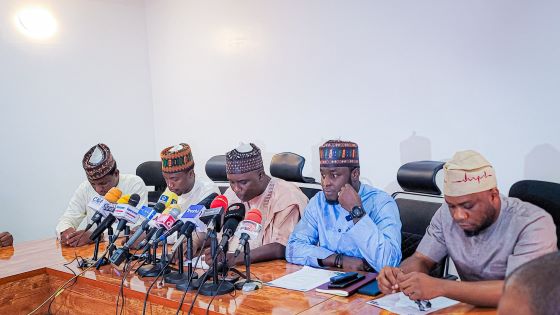
This followed some critical strategic resolutions during a recent two-day National Executive Council meeting of the Market Traders Association of Nigeria (MATAN) held in Abuja, the nations Capital.

The promoter and proponent of national Vat Direct Initiative (VDI), Hon Johnson Moses Olakunle, who doubles as the National Secretary MATAN and Chairman Steering Committee of the (VDI) used the 2024 maiden meeting which came barely one month after it’s National Conference and World Media briefing in Abuja in December, to thanked the National Executive Council members and the steering committe members drawn from the 36 states of Nigeria and FCT.

He noted that the meeting which according to him was well attended marks the beginning of its formal take off of advocacy, sensitization, implementation of programmes as he urged each state representatives to commence work and ensure that rules of engagement were applied.

Hon. Olakunle thanked President Bola Ahmed Tinubu for supporting the initiative which according to him will mitigate poverty, strengthen the efforts of Nigerian traders and critical informal sector of the economy by creating effective and efficient interaction on issues affecting their well-being and providing solutions like curbing multiple tax regime, unifying and codifying an ICT user-friendly system for ensuring an integrated tax system with improved database that will take proper care of numerous concerns of traders, marketers, distributors and haulage operators.

In doing this according to Hon Johnson, “it is hoped that the Executive Order 5 of the Federal Government which contemplates Ease of Doing Business will bring back maximum confidence in Government- Private Sector Business Relations and cascade down to the businesses of the rural population”.

Hon Johnson further noted that Attendees to the meeting who are majorly the state representatives, members of the steering committe, Zonal coordinators and Exco’s will resume operations in all the states with immediate effect noting that the implementation of the programme which in him words comes with several packages will further cater for the millions of the informal sector amongst which includes but not limited to access to single digit Loan, access to grant, health insurance, promotion of export of goods and services, and other value proposition.

Hon Johnson regretted the unfair manner in which the issues of multiple taxation has drastically affected the defenseless traders and call for total support of both the government and the general public to achieve an inclusive national solidarity towards Nigeria’s growth.

MATAN is a multi stakeholders umbrella body of the informal sectors socio-economic space and has been saddled with the responsibility of administration and management of affairs of the biggest informal sector cluster, over the years with over 40 million documented membership across all the 774and Area Councils in Nigeria.

Amongst some of its notable partners include the FIRS, JTB, Banks, Insurance companies, ALGON and other private sectors of the economy.